
KITCHEN LIGHTS: SUGGESTIONS FROM An ILLUMINATION DESIGNER
- homeimprovementide
- Apr 30, 2018
- 3 min read

The kitchen is the heart and soul of the home. It’s where we sort mail, read, do our homework, prepare signature meals for those we love and gather with our friends after dinner parties. This multi-functional, highly visible space needs layers of illumination to make it really shine, including task lighting, accent lighting and general lighting.
For the most effective and attractive kitchen lighting design, plan task lighting first to give you light where you really need it, then add accent lighting for visual interest. Add your general lighting last to fill the space with just the right amount of ambient light. Combine all three layers of light with the right kitchen light fixtures and dimmers, and you’ve got a recipe for kitchen design success. For more information on lighting layers and other considerations when selecting lighting, read our Lighting Design 101 article (coming soon).

KITCHEN TASK LIGHTING
Task lighting focuses on a specific area to provide targeted illumination for accomplishing tasks. Imagine yourself in the kitchen; think about whatever you normally do there and where you do it. Break the kitchen up into the individual task areas that need light: cabinets, drawers, countertops, pathways and the sink.
Lighting Kitchen Cabinet Interiors
One of the first things many people do when they head into the kitchen is turn on the lights and go to the fridge, which already has a light. When you open your cabinets, wouldn’t it also be nice to have light in there, too?
The best lighting solution for cabinet interiors is to install Light Channel Millwork on the underside of each shelf, a couple of inches from the front of the cabinets. This accurately lights items in each cabinet while avoiding any shadow in the front. The great thing about Light Channel Millwork is that it’s available in a wide variety of lengths made to order, ranging from 2 to 96 inches, and it’s easy for electricians to install.
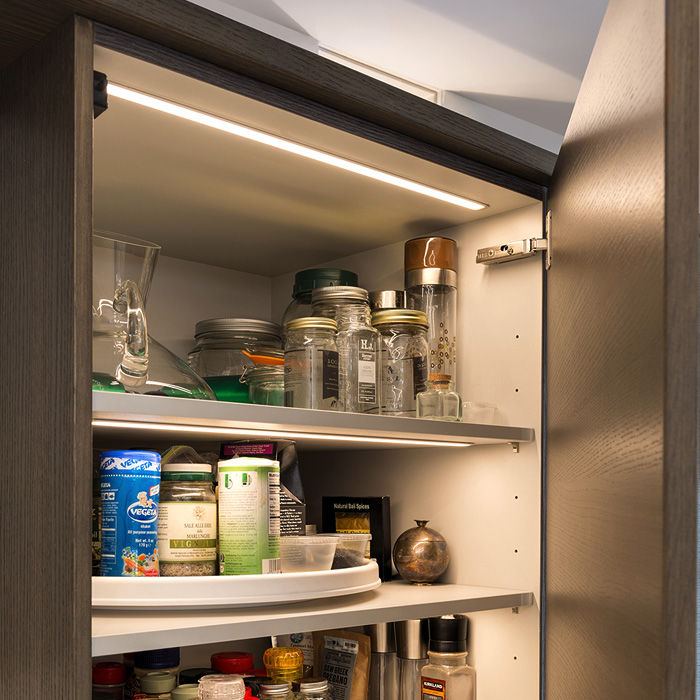
LED Soft Strip (tape light) is also an option for cabinet interiors, but use Soft Strip with caution. The individual dots might be seen, especially if the cabinets are higher up. In some cases, depending on the cabinets, you can use 45 Degree Light Channels or Soft Strip with an L Channel.

LED Puck lights create a different effect, ideal for creating an isolated pool of light. Use Pucks or Dot lights to highlight individual items or those in a series. Their compact size and easy installation make Pucks attractive to home owners considering a simple remodel.


For glass door cabinets displaying china or glassware, another option is to create back lighting by placing Soft Strip or L Channels (which provide a nice, wide flood) one to two inches from the back of the cabinet, shining either up or down. Definitely use L Channels with the Strip if you’re going to shine the light upwards.

Lighting Kitchen Drawers
When you open your refrigerator door, and now your cabinets, you appreciate the light. So why not do the same for your drawers? Simple LED Soft Strip placed in the right location will work perfectly and make your silverware sparkle. You don’t need a diffused lens here as there is no glare, only sparkle. If you use switches or motion sensors with the drawers and wire them up to the Soft Strip, the lights will turn on when the drawers are opened and then turn off automatically after you close them.
Original source of article: https://www.lightology.com/index.php?module=how_to&sub=kitchen-lighting


Comments